What a medical or dental office should expect from cleaners
A guide for practice managers on cleaning in medical and dental offices: touchpoints, cross-contamination, contact times and following your protocol.
A medical or dental office is not like other workplaces. Patients arrive unwell, anxious or both, and they notice everything. Here is what a practice manager should expect from a cleaning team, and the questions worth asking before you sign.
Start with your own protocol
Your practice has its own infection-control rules. These come from your clinical leaders and the standards that apply to your work, such as OSHA's Bloodborne Pathogens Standard. A good cleaning team does not replace that protocol. It follows it.
That means a few clear boundaries, agreed in writing:
- The team cleans the areas you assign, such as waiting rooms, restrooms, hallways, offices and floors
- Clinical waste and sharps are not handled unless the team is trained for it and you have agreed to it
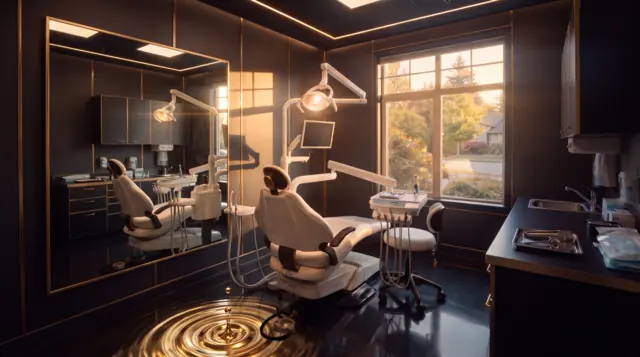
- Treatment rooms are cleaned only to your instructions
- Any products you require are used as you specify
If a cleaning company does not ask what your protocol is, that is a warning sign.
The waiting room and its touchpoints
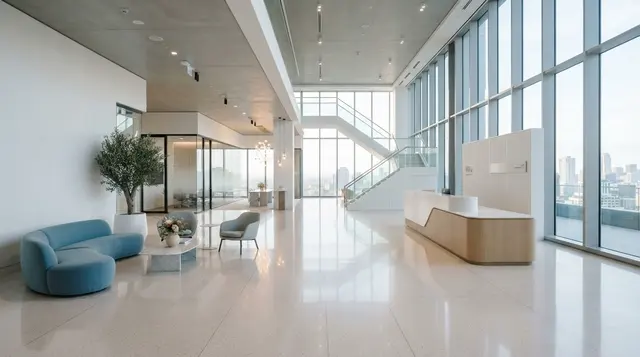
The waiting room is the most-used space in the building. In a single day it hosts patients, family members and sometimes children. Think about everything that gets touched:
- The check-in clipboard and pens
- Chair arms and the backs of chairs
- Reception counter and the sign-in tablet
- Door handles, especially the entrance and restroom doors
- Light switches and thermostat panels
- Toys and magazines, if you keep them out
These are cleaned and disinfected on a regular schedule, with surfaces cleaned first, then treated and left wet for the contact time on the product label. If you want to understand the difference between those steps, our post on cleaning, sanitizing and disinfecting explains it.
Cross-contamination control
This is where technique matters more than effort. The same cloth must never travel from a restroom to a reception desk.
A professional team keeps tools separate by area:
- Restroom cloths are kept apart from all other areas, and they are never used elsewhere.
- Cloths are colored or labeled so there is no guessing.
- Mops and buckets used in restrooms stay with restrooms.
- Used cloths are laundered or discarded, not reused on the next room.
- Gloves are changed between areas.
Ask your cleaner to explain their system. A clear answer is a good sign. A vague one is not.
Contact times
Disinfectants must stay wet on a surface for the time stated on the label, known as contact time or dwell time. A fast spray and wipe does not satisfy that. A cleaning team should be able to tell you what they do about it, and a good one works in sections so surfaces stay wet long enough.
Follow the label, including ventilation and glove instructions. Never mix chemicals. Bleach must not be combined with ammonia or with acids like vinegar.
Patient trust
Patients rarely compliment a clean waiting room. They notice only when it is not clean. A tidy restroom, an empty bin and fresh-looking chairs quietly say that the care behind the door is taken seriously too.
It matters just as much to staff. A clinical team that is not stopping to wipe the front desk or empty the waste bin has more attention for patients.
Privacy and reliability
A cleaning team in a medical setting works around sensitive information. Files, screens and patient paperwork should stay exactly where they are, undisturbed. Ask how a company handles this, and make sure expectations are clear before the first visit.
You pick the time: daytime, evenings or weekends. After hours is one option, and it keeps your team and patients out of the way. Every visit follows a checklist, and you can see what is covered on our medical and dental page. If you want us to look at your space first, book a walkthrough.
The short version
- Your own infection-control protocol comes first, and a good team follows it.
- Waiting rooms and touchpoints need regular cleaning, then the right product for its full contact time.
- Restroom cloths and tools stay separate from every other area.
- Clinical waste and sharps stay off the cleaning list unless trained and agreed.