
After-hours office cleaning: when it makes sense
Cleaning while your team is away means no noise, no blocked desks and no wet floors in the way. Here is when evenings and nights suit an office.
Cleaning goes fastest when nobody is in the way. Many businesses still have cleaners working around staff at midday, and that can work well too. Here is what after-hours cleaning offers, so you can decide whether it suits your office. You pick the time: evenings, early mornings or daytime, planned around your team.
Nobody is in the way
A cleaner who has to work around people cannot clean the way the job needs to be done. Desks are covered in papers and laptops. Chairs are occupied. Meeting rooms are in use. When the building is empty, a team can clear surfaces, move chairs, mop a whole area in one pass and finish a room before moving to the next.
It also means the work happens in the right order. Our post on the order pros clean in explains why dry work comes first and floors come last. That flow is hard to keep when people keep walking through.
Floors need time to dry
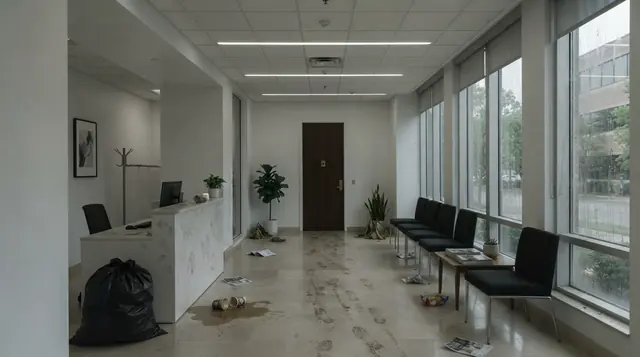
A freshly mopped floor is a slip risk and a magnet for footprints. Carpet that has just been cleaned needs time before anyone walks on it. After hours, floors can dry fully before your team arrives. During the day, you end up with wet floor signs in the hall and people tracking dirt back over clean areas. In a Chicago winter, when every shoe brings in salt and slush, this matters even more. See winter salt and office floors.
Noise, smells and products stay out of the workday
Vacuums are loud. Some cleaning products have a noticeable smell until they dry and the air moves. Nobody on a client call wants to hear a vacuum outside the door, and nobody with a headache wants to walk through a fresh coat of floor cleaner. Cleaning after hours keeps the noise and the smell away from your people and your visitors, so your workday stays quiet and focused.
Privacy and focus
Your desks hold client files, open screens and sticky notes with passwords on them. A good crew keeps its attention on surfaces, not on your paperwork. With the office empty, there is less chance of anyone seeing something they should not, and less chance of a cleaner being pulled into small requests mid-shift. Ask any company how it handles client privacy and what it does if it notices something unusual, like a leak or an unlocked door.
Your team walks into a finished office
The real payoff is the morning. It also helps with scheduling: the work can take the time it needs, without anyone watching the clock for the next meeting. People arrive, the trash is out, the restrooms are done, the conference room is reset and the floors are dry. That first impression counts for staff and for visitors alike. Our post on how your office is part of your sales pitch covers why.
What a professional team adds
Anyone can run a vacuum at night. The difference with a professional team is the system around it.
- A written checklist. The same tasks get done every visit, whoever is on shift. See what's in every visit.
- A fixed schedule. After-hours work only helps if it happens when it should. A good company keeps your slot and tells you early if something changes.
- A clear plan for access. Ask any company how it gets into the building, who locks up and what happens if an alarm goes off. A good answer is specific.
- A way to report problems. Broken lights, leaks or a spill that needs a repair person should be noted and passed on, not ignored.
After hours is one option, not a requirement. Daytime can work just as well for offices that are fine with a quiet crew around, and you pick the time that suits you. If you are weighing a staff cleaner against a service, our staff cleaner vs. cleaning company calculator puts both side by side.
The short version
- After-hours cleaning means no one is in the way, floors dry before morning and noise stays out of the workday.
- It also gives you more privacy and a finished office when your team arrives.
- A professional team adds a checklist, a reliable schedule, a clear access plan and a way to report problems.