
8 quick desk habits that keep an office cleaner between visits
Eight small habits your team can use to keep desks, shared break areas and meeting rooms cleaner between professional visits. Easy to share.
A professional crew can do a lot in one visit, but they cannot clean around what is in the way. These eight habits take almost no time, and they make each visit count for more. Feel free to paste this list into a team email or print it for the break room.
Eight habits worth sharing
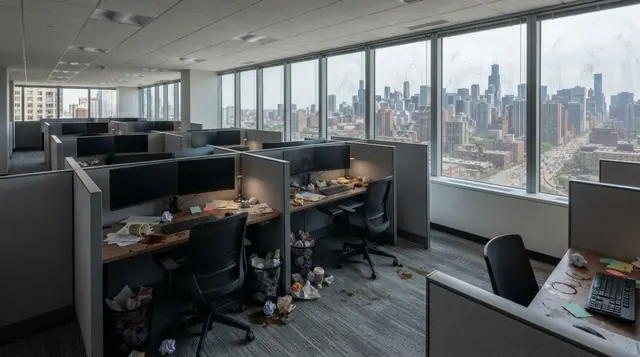
- Clear your desk before you leave. Papers, cups and cables off the surface, or at least pushed into one corner. If the crew has to work around a pile, the desk gets a quick pass instead of a proper wipe. A clear desk is a clean desk.
- Do the lunch crumb check. If you eat at your desk, spend twenty seconds before you head home brushing crumbs into a napkin and throwing it away. Crumbs left overnight can attract pests.
- Take your mug to the sink. Cups left on desks leave rings, and the last inch of coffee will grow mold in a few days. A rinsed mug on a shelf also saves a spill when someone moves it.
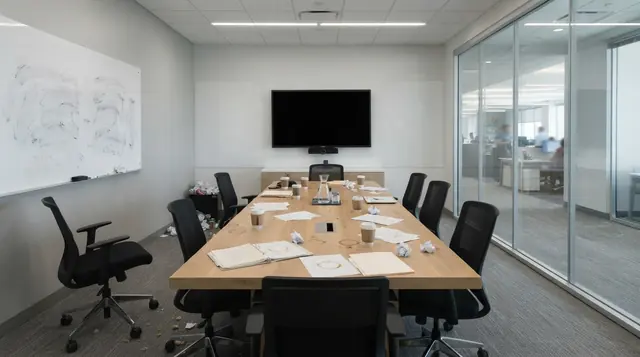
- Use the Friday break area rule. Every Friday afternoon, everyone clears away their own mugs, containers and trash from shared tables and counters. Then Monday's break room starts clear, and no one has to be the bad guy with a trash bag.
- Wipe your keyboard and phone once a week. Use wipes meant for electronics, or a lightly dampened cloth. Do not spray cleaner directly on a keyboard or screen, and unplug or power down the device first. Never use bleach wipes on screens.
- Wipe shared gear after use. The conference room remote, the whiteboard marker tray, the copier lid. A single wipe after a meeting costs ten seconds and means the next group starts clean.
- Wet umbrellas and boots get a spot. From December to March, slush and road salt walk in with everybody. A mat at the door and a tray for boots keep it off the carpet, which is far harder to treat than a hard floor. See more in Chicago winter floors.
- Keep the floor around your desk clear. Bags, shoes, space heaters, cords and boxes block the vacuum. If it is on the floor, the vacuum goes around it, and that spot stays dusty.
Where to keep the supplies
Habits stick when the tools are within arm's reach. Put one small kit in each shared area:
- A roll of paper towels or a stack of disposable wipes
- A small trash can with a lid in the break room
- Electronics wipes by the shared printer and in the conference room
- A sign-up note for the Friday break area clear-out
Ask your cleaning team what products are safe for your surfaces, and keep to those. Also, never mix products: never mix these explains why. Follow the label directions on anything you use.
Where a professional team makes the difference
Habits handle the daily layer: crumbs, mugs and clutter. They cannot replace the work that needs trained hands, the right products and a fixed routine. Restrooms, floors, glass, deep dusting and disinfecting high-touch points with the correct contact time are jobs where method matters. A professional team works from a written checklist in a set order, so the result does not depend on who has a spare ten minutes. You can see what is covered in every visit.
There is a second benefit that is easy to miss. When your staff do their small part and a professional team does the rest, each side knows what it owns. Nobody wonders whether to wipe the restroom, and the crew does not have to guess what is safe to move. If your team likes some structure, assign one habit to each day of the week, or set a "reset in five" reminder at 4:55 pm.
A note for office managers
Pick two or three of these, not all eight, and introduce them gently. A short message works better than a long policy. Something like: "Clear your desk surface when you leave tonight, so the cleaning crew can wipe it." Keep the tone friendly, thank people when they do it, and let the habits spread by example.
You do not need a perfect office. You need a few small routines that make the professional visit count for more, and a team that feels the space is looked after.
The short version
- Clear desks and floors so the crew can wipe and vacuum properly.
- Deal with crumbs, mugs and shared break room surfaces every week, and use the Friday rule.
- Wipe keyboards and shared gear with electronics-safe wipes, and never spray cleaner on electronics.
- Choose two or three habits to start, and leave the heavy cleaning to the professionals.